






A ring is worn longer each day than almost anything else you own, and it is felt in fractions. The gap between a size 6 and a size 6.5 is about 1.3 millimeters of circumference, yet a finger registers it at once. Ring sizing rewards a little method.
Here is how to find ring size at home, what a comfortable fit feels like, and when ring sizing at a jeweler saves time, whether you are choosing engagement rings or replacing a band that has begun to slide.

How to Measure Ring Size at Home

Wrap a strip of paper or unwaxed dental floss once around the base of the finger, mark where the ends meet, and read the length against a ruler in millimeters. That ring measurement is the number that matters. In any ring size guide, roughly 52 millimeters is a US size 6, 54 is a size 7, and 57 is a size 8.
Measure in the late afternoon, when the hand is warm and at rest. A cold finger measures small, a warm one measures large, and mornings are the slimmest. Repeat on three days and take the middle value. If the knuckle is broader than the base of the finger, size the knuckle.
How a Ring Should Fit
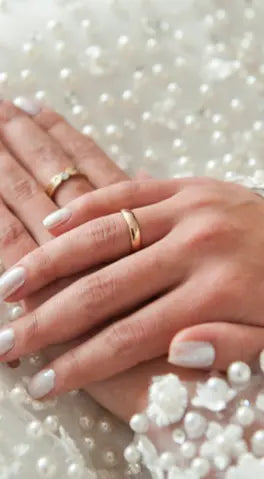
A well-sized ring passes the knuckle with light resistance and settles with a slight grip at the base of the finger. It turns with friction and leaves no groove after an hour. Good ring sizing accounts for width: a band of 6 millimeters or more covers more skin and usually asks for a half size up, which is worth remembering among our wedding bands.
Jewelry Store Ring Sizing

Home ring sizing carries an error of about half a size either way. Jewelry store ring sizing removes it. A jeweler slides graduated metal sizers over the knuckle and compares wide and narrow fits. Profile matters too, since domed and flat comfort-fit bands feel different at the same size, which is worth testing on pieces by Noam Carver and Michael M.
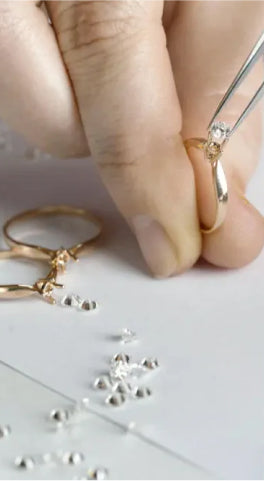
Ring resizing is possible for most gold and platinum bands, usually within one or two sizes, by adding or removing metal at the shank and polishing the seam. Eternity bands are set all the way around, and tungsten typically cannot be altered. Our team handles ring resizing and repair in Charlotte.
Visit Ballantyne Jewelers
For unhurried ring sizing in Charlotte, NC, Ballantyne Jewelers welcomes you to our showroom, with a ring you already wear or none at all. We measure, compare profiles, and confirm the size before anything is ordered or altered. Browse our fine jewelry collection beforehand, then book an appointment.
FAQs
How can I find out my ring size?
Ring sizing starts with the circumference of the base of your finger. Measure it with a paper strip and ruler at home, or ask a jeweler to fit you with metal sizers.
How should a ring fit?
Snug enough to stay put and loose enough to clear the knuckle with light resistance. It should turn with slight friction and never pinch.
Can I measure my ring size at home?
Yes. A strip of paper and a millimeter ruler are enough for reliable home ring sizing when the reading is taken in the afternoon and repeated on three days.
Does ring size change throughout the day?
Yes. Heat, salt, activity, and the hour all move it. Fingers run smaller in the morning and in the cold, so late afternoon gives the truest reading.
Are ring sizes the same for men and women?
The scale is identical. Men's rings tend toward larger sizes and wider bands, so the half-size adjustment for width comes up more often.
Can a ring be resized?
Most gold and platinum rings can, usually by one or two sizes. Eternity bands and hard metals such as tungsten are limited, so ask before you buy.
Does a wider ring need a different size?
Often it does. Bands of 6 millimeters or more generally fit best a half- to a full-size larger than a slim band on the same finger.